CUF Takes Over HPA Saúde: What the Change Means for Healthcare in the Algarve

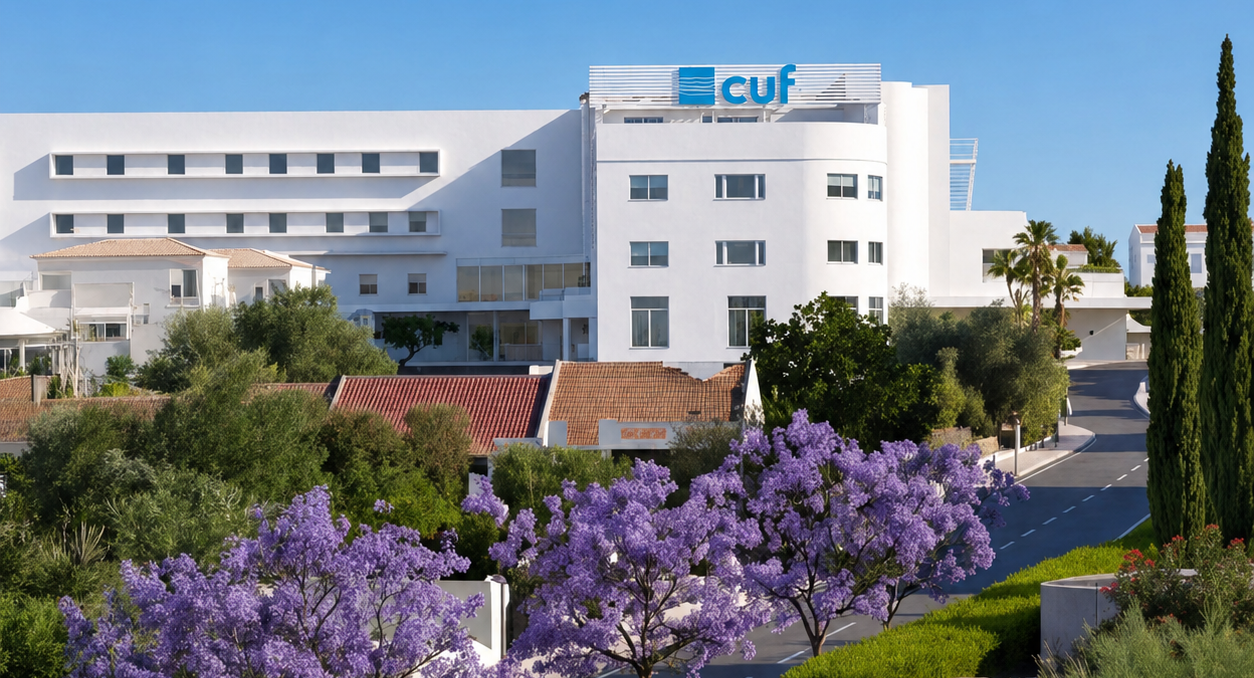
Private healthcare in the Algarve is entering a significant new chapter. In 2026, CUF completed the acquisition of a 75% majority stake in Grupo HPA Saúde, bringing one of southern Portugal’s best-known private healthcare networks into the CUF group.
The agreement was originally announced in March 2025 and was subject to approval from Portugal’s Competition Authority, the Autoridade da Concorrência. Following an in-depth review, the regulator approved the transaction in January 2026, subject to several conditions designed to preserve competition in the private healthcare market.
For patients living in the Algarve particularly international residents who rely heavily on private healthcare the change is worth paying attention to.
From HPA Saúde to CUF
Grupo HPA Saúde has been operating since 1996 and developed a strong presence across the Algarve, Alentejo and Madeira. Before the acquisition, the group consisted of five hospitals and 17 clinics, providing consultations, diagnostics, surgery, emergency services and specialist treatment.
CUF, meanwhile, is one of Portugal’s largest and most established private healthcare networks.
The acquisition therefore gives CUF something it previously lacked: a major presence in southern Portugal.
Since June 2026, HPA hospitals and clinics have begun progressively integrating into the CUF network and adopting CUF branding. The process is expected to take place gradually rather than overnight.
What Does This Mean for Existing HPA Patients?
For existing HPA patients, the most important point is that the hospitals and clinics are not simply disappearing or being replaced.
Patients do not need to change hospital or doctor simply because CUF acquired the group. Existing facilities continue operating while the systems, branding and services are progressively integrated.
During the transition, some HPA systems remain in place. For example, patients may still use the myHPA Saúde app and HPA appointment platforms for certain services while integration with CUF’s digital systems continues.
One of the main expected benefits is improved continuity of care across Portugal. A patient who has previously been treated at a CUF hospital in Lisbon, Porto or another region may eventually have greater continuity when receiving treatment in the Algarve, as medical information and clinical systems become more connected.
This could be especially useful for international patients, second-home owners and patients who divide their time between different parts of Portugal.
What Has CUF Promised?
The acquisition was closely examined by Portugal’s Competition Authority because of concerns that a larger private healthcare group could potentially reduce competition or increase prices.
As part of the approval, CUF accepted a number of commitments.
These include limits on certain annual price increases for private patients and controls relating to changes in commercial conditions with insurers and health subsystems. Price adjustments are expected to be linked to factors such as inflation and changes in Portugal’s national minimum wage rather than being completely unrestricted.
There are also commitments relating to transparency and regulatory monitoring.
Another significant condition concerns competition in the Algarve itself.
CUF committed to facilitating the development of a new medium-sized hospital in the Algarve that would ultimately be operated by another independent healthcare provider. The aim is to ensure that the expansion of CUF does not leave the region with too little competition in private healthcare.
For patients, these regulatory conditions are important because they are designed to balance CUF’s expansion with protections relating to pricing, choice and competition.
What Patients Can Expect During the Transition
For most patients, the first visible change is likely to be branding.
Behind the scenes, however, the longer-term objective is deeper integration between medical teams, clinical records, appointments, specialist services and digital platforms.
In the short term, patients may therefore see a mixture of HPA and CUF systems operating at the same time.
Over time, the expectation is that patients in the Algarve will gain access to a larger national network of specialists, hospitals and clinical resources.
The transition should therefore be evolutionary rather than disruptive.
What This Means for the Algarve?
The arrival of CUF is another sign of the Algarve’s transformation from primarily a tourism destination into a region increasingly designed for year-round living.
The Algarve continues to attract retirees, entrepreneurs, remote workers, international families and property owners, and access to high-quality healthcare is an important consideration for patients and residents deciding whether to relocate or invest long term.
For property owners and investors, infrastructure such as hospitals, international schools, transport links and professional services plays an important role in the attractiveness of a region.
The HPA-to-CUF transition therefore goes beyond a simple change of name on a hospital building.
It represents the arrival of one of Portugal’s largest healthcare brands in a region experiencing significant international investment and population growth.
For existing HPA patients, the key message is reassuring: care continues, the transition is gradual, and patients should not need to change doctors or hospitals simply because of the acquisition.
And for the Algarve as a whole, a larger healthcare network combined with regulatory protections on competition and pricing could strengthen the region’s appeal not simply as somewhere to visit, but as somewhere to live, invest and build a long-term future.


Comments